
Precision is a critical requirement in metal coil processing, where even small variations in strip width, edge quality, or winding tension can affect downstream manufacturing. A precision slitting machine converts wide metal coils into narrower strips while maintaining consistent dimensions and stable material handling. For steel service centers and metal processors, understanding how cutting tools, tension control, alignment, and automation work together is essential to achieving reliable slitting quality and production efficiency.
Coil slitting is widely used to prepare metal strips for stamping, roll forming, tube production, transformer cores, and electrical equipment. In these applications, inconsistent strip widths can cause feeding difficulties, while excessive burrs, scratches, or uneven winding may lead to additional processing and material waste.
A high-performance precision slitting machine must maintain stable cutting conditions throughout the coil. Its performance depends not only on knife accuracy but also on strip tracking, tension management, equipment rigidity, and recoiling stability. The objective is to achieve repeatable strip dimensions and clean edges without compromising material surface quality or production efficiency.
Slitting knives directly determine the quality of the cut edge. Knife sharpness, alignment, overlap, and clearance must be appropriate for the material's thickness and mechanical properties. Excessive clearance can increase burr formation and edge deformation, while insufficient or uneven clearance may increase cutting forces and accelerate tool wear.
To maintain consistent strip widths, operators should check knife condition, spacer dimensions, shaft alignment, and tooling clamping before production. The cutting setup should also account for material strength and the required edge quality. Regular inspection helps prevent dimensional deviations and reduces the risk of defects developing during long production runs.
A rigid slitter head helps maintain stable knife positioning under cutting loads. Shaft deflection, vibration, or loose tooling can cause variations in strip width and edge quality, particularly when processing thin materials or producing multiple narrow strips.
Accurate spacer arrangements and secure tooling locking are essential for repeatable cutting patterns. Buyers should also consider how quickly and consistently the equipment can be configured for different products. Double-slitter and turnstile systems provide different tooling arrangements, allowing manufacturers to select a configuration that suits their production volume, product mix, and changeover requirements.
Strip tension affects material stability before, during, and after slitting. Excessive tension may stretch or damage sensitive materials, while insufficient or uneven tension can contribute to strip wandering, wrinkles, and loose recoiling.
Common tension-control options include felt plate units, belt bridles, and driven rolls. The most suitable system depends on material thickness, surface condition, lubrication, and the required tension range. For electrical steel and other surface-sensitive materials, belt bridle or driven-roll systems can help reduce unwanted surface contact when appropriately configured.
SUMIKURA offers different tension-unit options for its slitting lines, enabling the equipment configuration to be matched to the material and processing requirements.
Even accurately positioned knives cannot compensate for unstable material feeding. If the incoming coil shifts laterally, the resulting strips may deviate from the intended cutting pattern, affecting finished widths and downstream processing.
Stable unwinding, proper coil centering, correctly adjusted guides, and consistent strip tracking help maintain alignment throughout the line. Operators should also inspect incoming material for camber, edge damage, and other conditions that may influence feeding stability. Maintaining alignment is a coordinated process involving both equipment settings and material quality.
After slitting, individual strips must be separated and rewound into finished coils. Separator positioning, back tension, and synchronized recoiler operation influence coil tightness and shape. Poorly controlled winding may cause telescoping, uneven coil edges, or deformation during handling and storage.
Each strip must be wound under suitable tension for its width, thickness, and material properties. Proper separator arrangements help keep strips organized, while stable back tension supports consistent winding. For high-quality electrical steel, avoiding scratches and dents is particularly important because surface damage can affect subsequent processing and material performance.
Automation helps reduce setup variation and improve repeatability between production orders. Automated positioning, consistent parameter management, and repeatable tooling arrangements can reduce manual adjustment errors and shorten changeover time.
A slitter exchange system can make tooling changes more efficient by allowing replacement knives to be prepared away from the active slitting stand. SUMIKURA provides four-arm turnstile equipment and automatic slitter exchange systems designed for faster tooling changes. The appropriate configuration depends on the production workflow and required changeover frequency.
Automation can also support more consistent production when machine settings are linked to product specifications. However, automated setup does not eliminate the need for tooling inspections, dimensional checks, and process monitoring. Reliable accuracy requires coordinated control of the entire line rather than automation of a single component.
High-speed operation increases production potential, but it also makes stable tooling, strip tracking, and tension control more important. The appropriate line speed depends on material thickness, strength, strip width, cutting configuration, and finished-coil requirements. Running at maximum speed is not necessarily the best choice if it compromises edge quality or winding stability.
Before production, inspect the knives, spacers, clamping arrangements, guides, and tension-control components. During operation, monitor strip width, burr formation, surface condition, vibration, and coil winding quality. Periodic measurements help identify deviations before they affect an entire batch.
Preventive maintenance should include checks of tooling wear, shaft alignment, tension systems, drive components, and recoiler condition. Recording setup parameters and inspection results also helps operators reproduce successful settings and identify the causes of recurring defects.
Selecting a precision slitting machine begins with the materials and finished products required. Buyers should evaluate material type, coil thickness, maximum width and weight, required strip widths, number of strips per pass, dimensional tolerances, and finished-coil dimensions.
Tension-control options deserve particular attention when processing thin electrical steel, stainless steel, aluminum, or materials with sensitive surface finishes. Slitter configuration, tooling exchange methods, automation level, line speed, safety features, and maintenance accessibility should also be considered.
It is important to distinguish maximum machine capacity from achievable production performance. Maximum width, thickness, speed, and strip count may not be available simultaneously for every material or cutting pattern. Before purchasing, confirm the expected operating range and quality requirements with the equipment manufacturer.
SUMIKURA supplies slitting lines for conventional metal coil processing and specialized electrical steel applications. According to its published specifications, the standard slitting line supports HSS, cold-rolled steel, hot-rolled steel, stainless steel, and aluminum. Its listed capabilities include coil widths up to 2,500 mm, coil weights up to 35 tons, material thicknesses from 0.2 to 9.0 mm, and a maximum of 50 strips. The line offers double-slitter and turnstile configurations, with felt plate, belt bridle, or roll-type tension units available. These specifications provide a starting point for evaluating equipment suitability, subject to the actual production configuration.
For electrical steel processing, SUMIKURA also provides dedicated slitting lines for CRGO and CRNGO materials used in transformer cores, motors, and electrical equipment. Published specifications include coil widths of 400–1,250 mm, coil weights up to 15 tons, thicknesses of 0.1–0.5 mm, and a maximum of 40 strips, with belt bridle tension control. These requirements differ from conventional steel slitting because thin electrical steel demands careful handling and protection of its surface condition.
SUMIKURA's belt bridle solutions include different belt arrangements for processing requirements involving oily and non-oily sheet materials. Selecting the appropriate tension system can help improve strip handling and support stable tension control.
For manufacturers seeking a precision slitting machine, the key is to evaluate the complete process—from knife clearance and slitter rigidity to strip guidance, tension control, automation, and recoiling. Matching these elements to the material and finished-strip specifications helps improve dimensional consistency, reduce avoidable defects, and support efficient production.

カッティングラインのスペシャリスト!
 日本の工場
日本の工場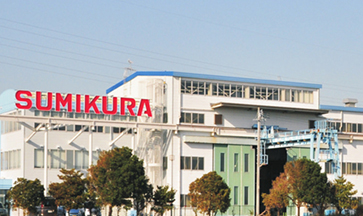
住所
静岡県浜松市南区三新町487-3
 日本の市場:+81 53-425-5331
中国の工場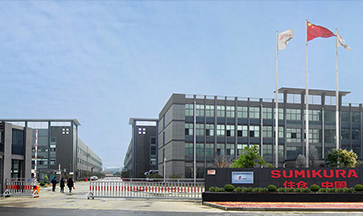
住所
中国浙江省徳清県逸仙路265号
海外の市場:+86 572-883-2016



